Writing at the Cave
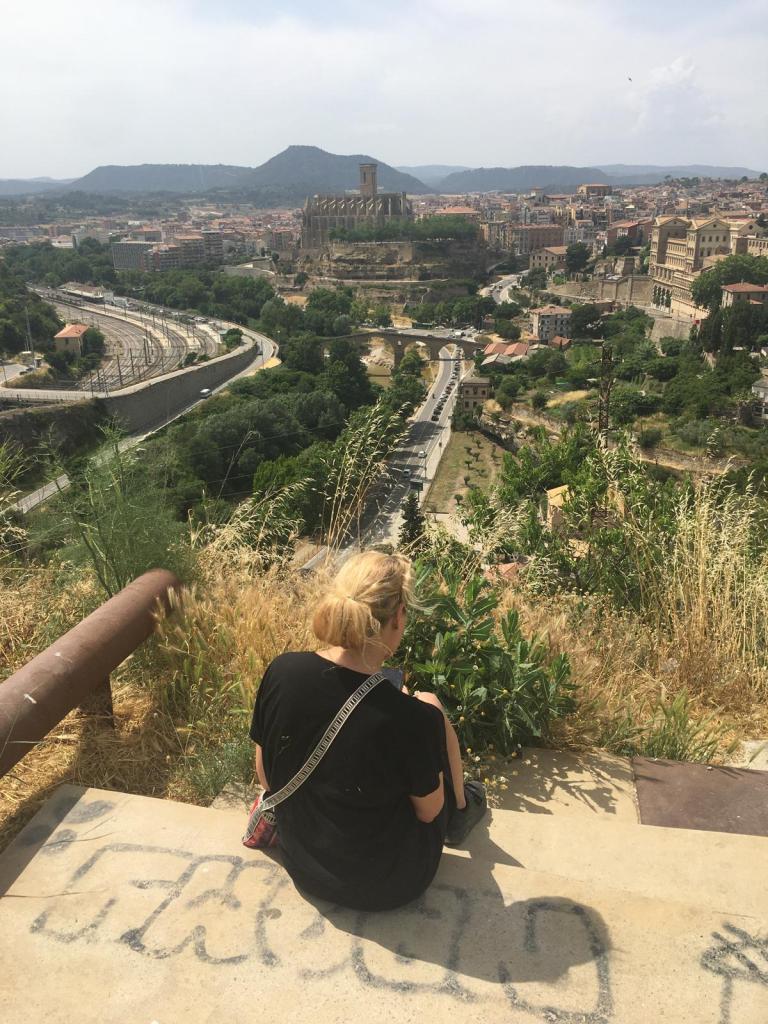
These days, I’m finishing the manuscript of my new novel on location. None of the places in the story are mentioned by name, yet the landscape around me has influenced the narrative more than I expected, and the Cave of Saint Ignacio in Manresa has even reshaped the very concept of my story.
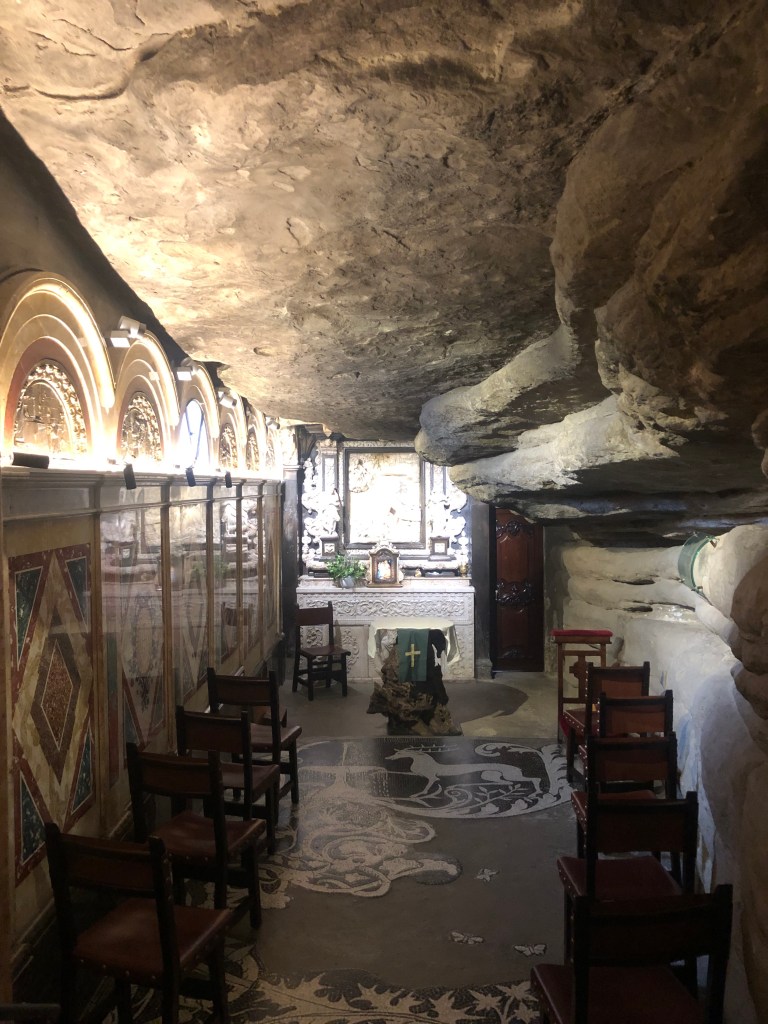
I first arrived in Manresa by accident some months ago. I wasn’t looking for anything spiritual, or anything at all, just passing through on my way to somewhere else. But the cave, a small, unassuming space carved into the rock where Ignacio spent months in solitude and contemplation, quietly stayed with me. At the time, I had nearly finished the first draft of my new manuscript. Or so I thought. After that visit however, a new storyline emerged. The main character suddenly became older, looking back on a life shaped by deception and the longing for truth and meaning. The story’s timeline shifted: the main narrative I wrote before moved 25 years into the past, while the Manresa-inspired storyline remained in the present.
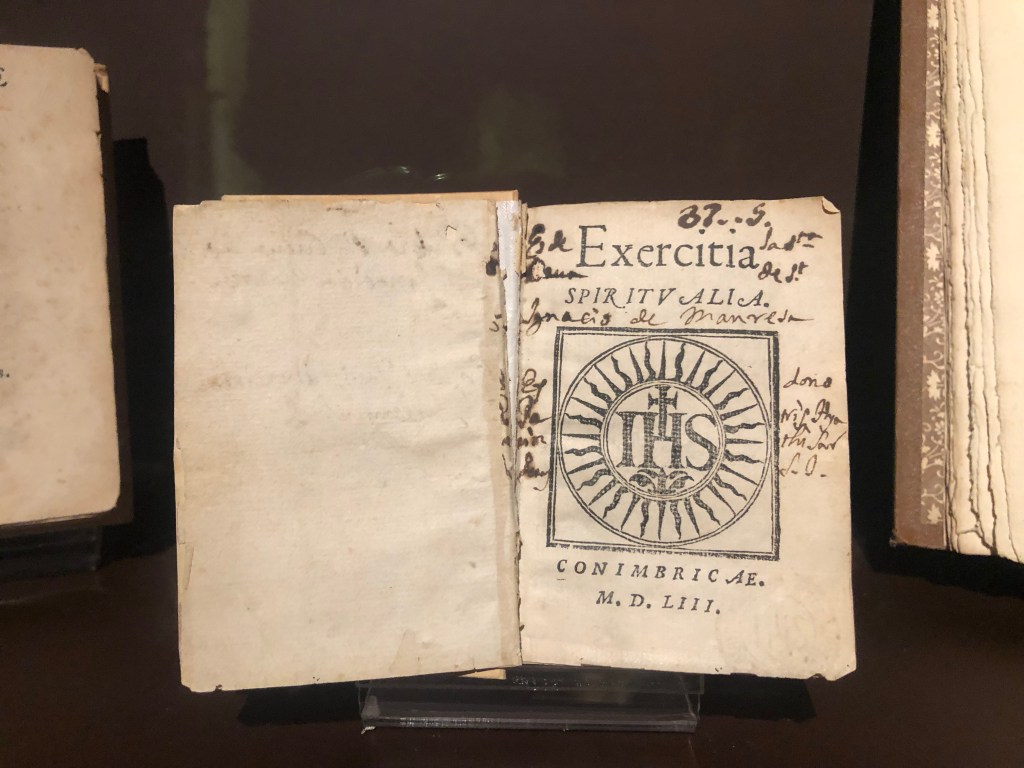
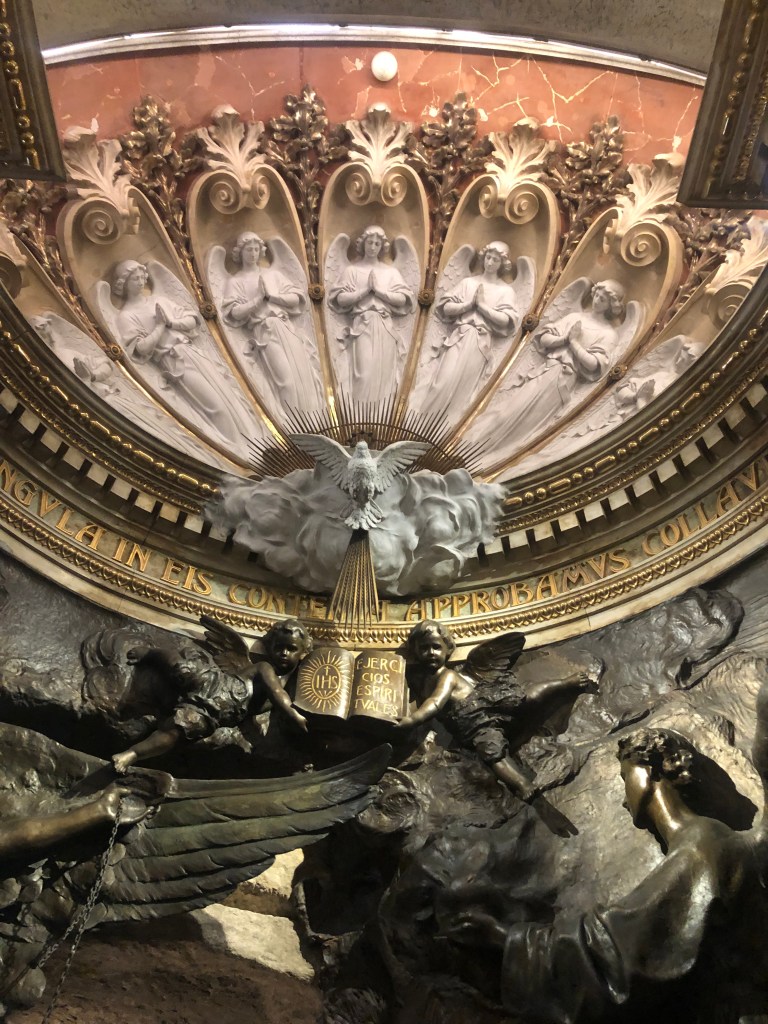
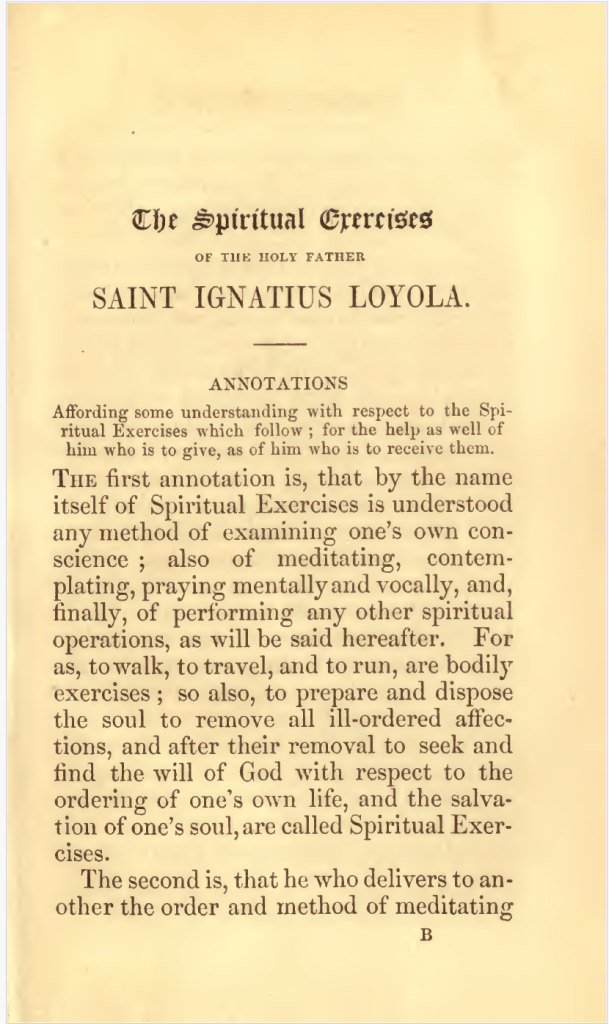
I’ve returned to the cave, to complete the manuscript and to study the 𝐒𝐩𝐢𝐫𝐢𝐭𝐮𝐚𝐥 𝐄𝐱𝐞𝐫𝐜𝐢𝐬𝐞𝐬, 𝐚 𝐛𝐨𝐨𝐤 𝐰𝐫𝐢𝐭𝐭𝐞𝐧 𝐛𝐲 𝐈𝐠𝐧𝐚𝐜𝐢𝐨 𝐢𝐧 𝟏𝟓𝟐𝟐. I’m not religious, and five centuries have passed, but I can’t help seeing how deeply his ideas still resonate with the questions we ask today. For my own understanding I’ve started translating his thoughts into a more modern frame: ‘Sins’ could be seen as the habits that pull us away from what truly matters. ‘Discernment of spirits’ becomes emotional awareness and clarity, learning to recognize what moves us toward or away from freedom. ‘God’s will’ might be reframed as inner alignment, that quiet sense of being in tune with something larger than ego.
Five hundred years later, humans still wrestle with the same questions: What drives me? What do I need to let go of? What am I being called toward?
You can find an English translation of Spiritual Exercises here: https://dn790001.ca.archive.org/0/items/a588350800loyouoft/a588350800loyouoft.pdf
Cova de Sant Ignasi
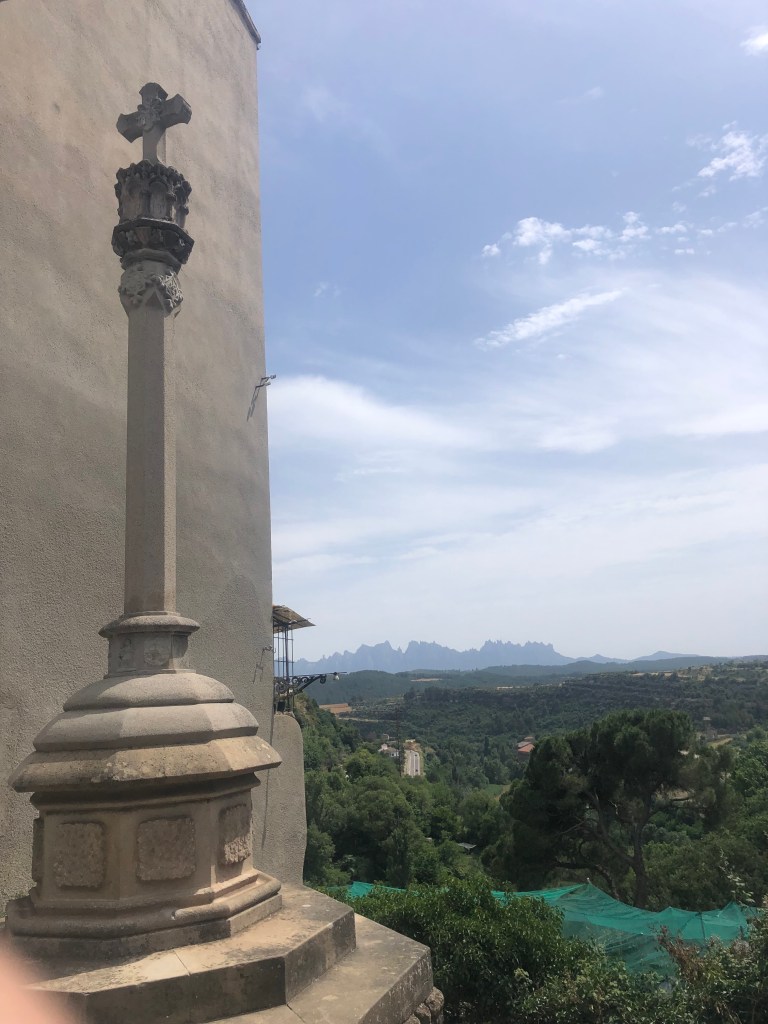
After his military injury and dramatic conversion in 1521, Ignacio renounced his former life of nobility and vanity. In 1522, he set off on a pilgrimage to the Abbey of Montserrat, where he laid down his sword before the Black Madonna, symbolizing his surrender to God.
Despite his injury he walked to Manresa afterwards, a small town north of Barcelona, intending to stay only a few days. Instead, he stayed for about 10 months, spending much of his time in prayer and contemplation, most of the time in a small cave overlooking the River Cardener.
In the cave, Ignacio experienced intense inner turmoil and spiritual struggle, including feelings of unworthiness and ascetic extremes. Profound mystical insights, especially about how God works in everyday life. A major turning point: he realized that God’s love and grace are found not in extremes, but in balance, attentiveness, and interior freedom.
These insights laid the foundational structure of the Spiritual Exercises — a method to help others discern, reflect, and respond to God in their own lives.
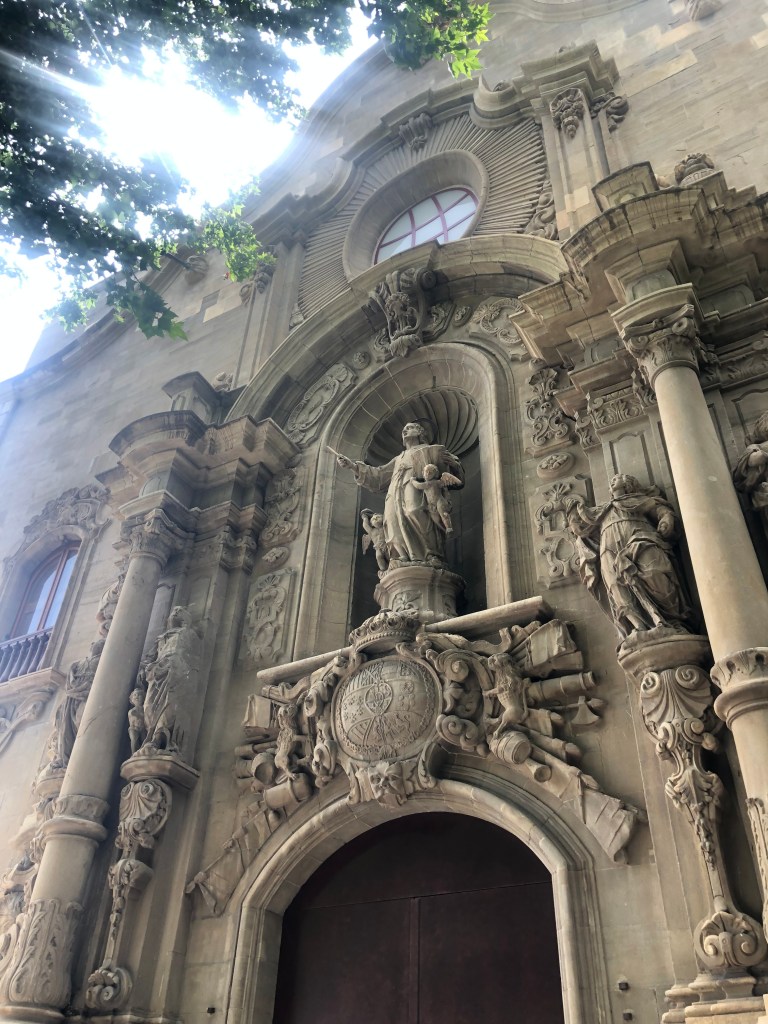
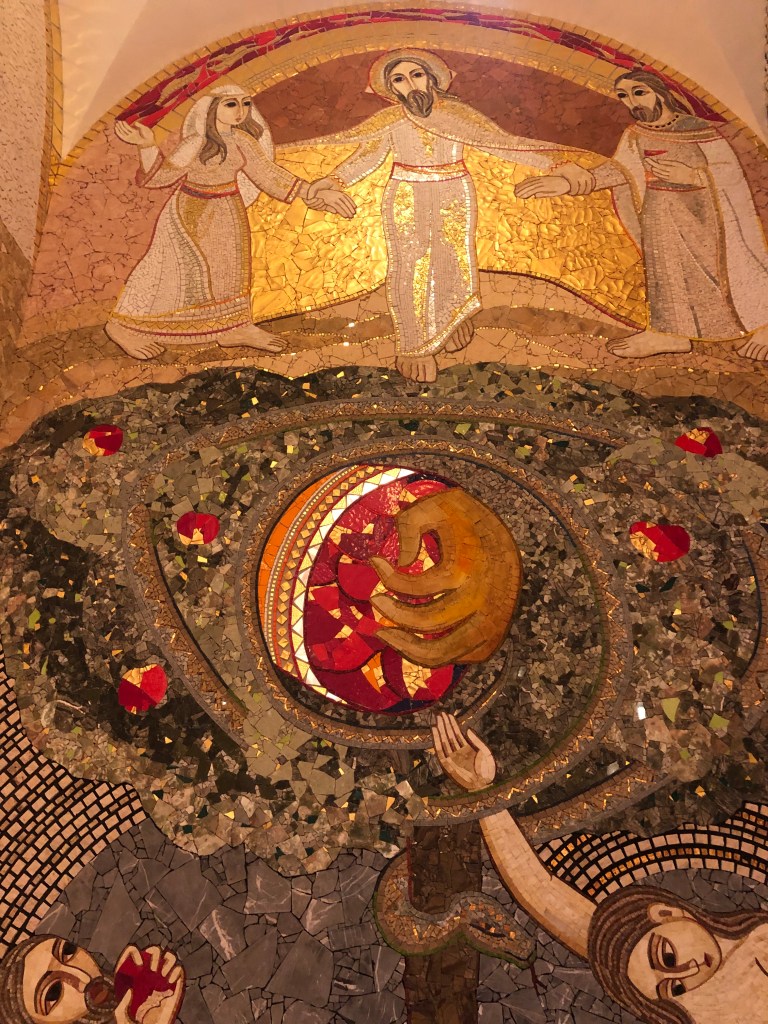
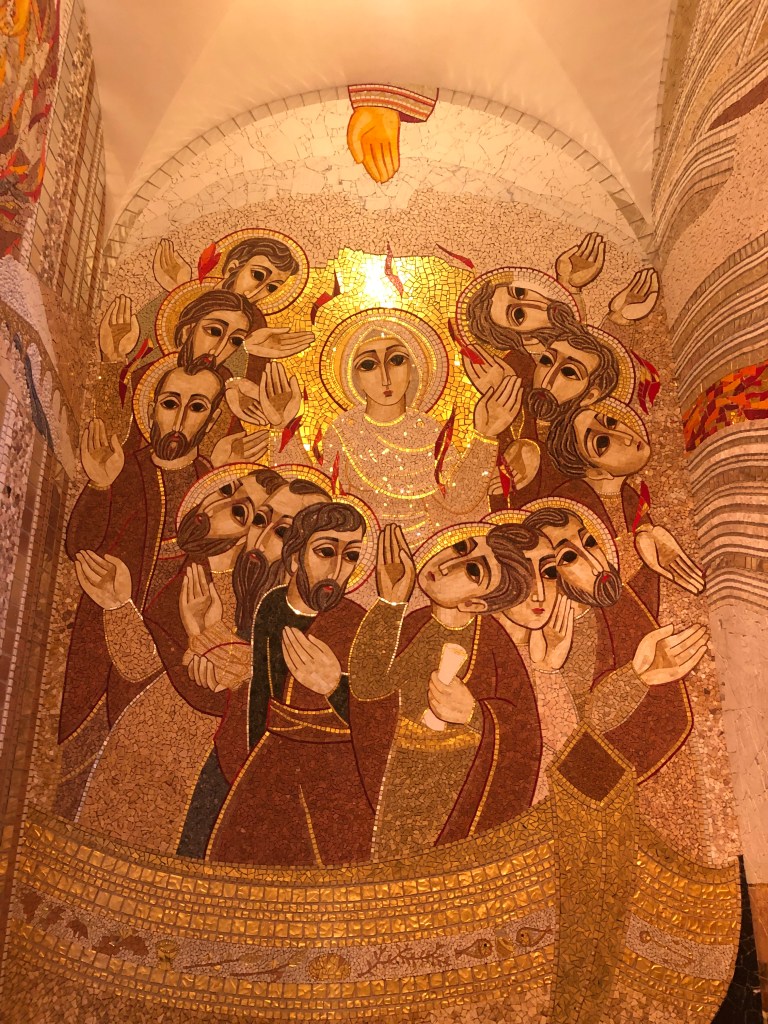
Today, the Cova de Sant Ignasi is a pilgrimage site and Jesuit spiritual center, next to a chapel and retreat house built into the rock. It has become a symbol of inner transformation, contemplation, and discernment
It represents the “birthplace” of Ignatian spirituality — where contemplation met action, and mystical experience became a path of practical service and discernment.
Even for non-religious seekers, the Cave at Manresa can be seen as a metaphor for stepping away from noise to face oneself. Letting life “fall apart” to be remade in deeper alignment and finding wisdom in silence, solitude, and surrender.
In short:
Spiritual Exercises by Ignatius of Loyola
The Spiritual Exercises (Latin: Exercitia spiritualia) is a guidebook for spiritual growth and discernment. It forms the foundation of Ignatian spirituality and was originally designed as a four-week retreat experience for deepening one’s relationship with God.
Structure: The Four Weeks
Each “week” is not necessarily seven days, but a phase in a spiritual journey:
- Week One – Reflection and Purification:
Focuses on sin, human brokenness, and God’s mercy. The retreatant reflects on personal sins, the consequences of sin, and the love of God that calls us to transformation. With core theme of discernment of spirit: Learning to recognize God’s voice versus misleading influences.
- Week Two – The Life of Christ and Discipleship:
Centers on the life and ministry of Jesus. The retreatant meditates on Gospel scenes to better know, love, and follow Christ. With core theme of Indifference (Holy Detachment): Letting go of disordered attachments to choose freely what leads to God.
- Week Three – The Passion of Christ:
Meditations on the suffering and death of Jesus. The aim is to enter into His passion with compassion and commitment. With core theme of Contemplation: Imaginative prayer, especially entering Gospel scenes as if present.
- Week Four – The Resurrection and God’s Love:
Contemplates the joy of Christ’s resurrection and the call to live a life rooted in love, service, and spiritual freedom. With core theme of the Principle and Foundation: Humanity is created to love, serve, and praise God — this sets the purpose of life.
Purpose
The Spiritual Exercises are not a book to be read passively, but a practical manual for guided spiritual retreat, meant to lead to:
- Inner transformation
- Clearer life direction
- Deeper intimacy with God
Translating to now
Instead of 16th-century theological terms, we reframe key concepts in today’s emotional and psychological vocabulary:
| Original Concept | Modern Reframe |
| Sin | Disordered attachments / harmful patterns |
| Indifference (Ignatian) | Inner freedom / detachment from ego-desires |
| Discernment of Spirits | Emotional awareness + decision-making clarity |
| Meditations/Contemplations | Guided visualizations / embodied prayer |
| God’s Will | Deepest, truest calling / inner alignment |
Week 1: Awareness, Honesty, and Letting Go
Traditional Focus:
Sin, disorder, and God’s mercy.
Modern Translation:
Begin with radical self-honesty. Examine your life, not in shame, but in compassion. What stories, patterns, fears, or ego needs are shaping your choices? What keeps you from deeper freedom, connection, or love?
Key Practices:
- The Examen (daily reflection): Where did I feel most alive today? Least alive?
- Naming inner “noise” (e.g., approval-seeking, avoidance, anxiety)
- Letting go of illusions about self-image or control
Prayer or Meditation Prompt:
What is no longer serving me? What am I ready to release?
Week 2: Discovering Your Deepest Desire
Traditional Focus:
The life of Christ and choosing to follow Him.
Modern Translation:
Look closely at your calling — what draws your heart? What kind of life do you long to live? What kind of person are you becoming? Reflect on mentors, heroes, or role models who embody the kind of love and courage you admire.
Key Practices:
- Visualization: imagine yourself in key Gospel scenes (or contemporary equivalents)
- Journaling on “life-giving choices”
- Daily discernment: What pulls me toward light, and what toward fear or ego?
Prayer or Meditation Prompt:
What calls me forward? Whom do I want to become?
Week 3: Facing Pain and Staying Present
Traditional Focus:
The Passion of Christ — suffering and sacrifice.
Modern Translation:
Sit with the reality of suffering — your own and others’. Don’t turn away. How do you respond to pain? How do you carry grief, vulnerability, or injustice? This is the week of depth and compassion.
Key Practices:
- Silent meditation on sorrow or loss
- Writing or creating from a place of pain
- Naming your crosses — and who helps you carry them
Prayer or Meditation Prompt:
What does it mean to stay open-hearted in a broken world?
Week 4: Joy, Renewal, and Choosing Life
Traditional Focus:
The Resurrection and living in God’s love.
Modern Translation:
Now you’ve faced yourself, your longings, your pain — and can step into joy. This week is about aliveness, purpose, and grateful presence. How do you want to live from here? What gifts are you carrying forward?
Key Practices:
- Walking meditation in nature
- Gratitude journaling
- Writing your “yes”: a personal statement of purpose or intention
Prayer or Meditation Prompt:
How can I live with joy, generosity, and trust in what’s unfolding?


Leave a comment